
The Business Owner’s Guide to Garden Offices in 2026: Tax, VAT & ROI Explained
A clear guide for UK business owners on garden office tax, VAT, and business use in 2026. Understand key considerations before speaking to your accountant.
If you run a UK business, a garden office isn’t just extra space — it can be a practical, long-term investment in how you work.
But once you start looking into it, the questions quickly go beyond design and cost:
Can my company pay for a garden office?
Can I reclaim VAT on a garden room?
Is it tax deductible?
Will it affect my home’s value in the future?
The honest answer is that there’s no one-size-fits-all approach. The way a garden office is treated for tax and accounting purposes depends heavily on your personal circumstances, how the space is used, and how the purchase is structured.
This guide is designed to help you understand the key considerations, so you can have a more informed conversation with your accountant.
Important Disclaimer
Backyard Cabins are specialists in the design and construction of garden rooms. We are not tax advisors or accountants.
The information below is based on general industry understanding and common approaches used by UK business owners. It is provided for guidance only and does not constitute financial or tax advice.
Tax treatment depends on individual circumstances, and you should always consult a qualified accountant before making any decisions.
Company Purchase vs Personal Purchase: Where Most Decisions Start
One of the first questions business owners ask is:
“Should my company buy the garden office, or should I buy it personally?”
There are generally two common approaches.
Option 1: The Company Purchases the Garden Office
Some business owners choose to have the limited company pay for the garden office directly.
This may allow the business to fund the project without needing to extract personal income first, but it can also introduce additional considerations.
For example:
The building is located on personal land
The space may have mixed use (business and personal)
There could be implications around benefits-in-kind (BIK) depending on usage
This approach can work well in certain scenarios, but it is highly dependent on how the space is used and structured.
Option 2: Personal Purchase with Business Use
Another common approach is to purchase the garden room personally and allow the business to use it.
In this case, some business owners:
Retain full personal ownership
Maintain flexibility over how the space is used
Charge the business a reasonable amount for its use
This route is often considered simpler from a long-term ownership perspective, but again, it depends on your specific setup.
👉 This is one of the most important areas to discuss with your accountant early on.
Capital Allowances & Business Expenses: What You Should Know
When it comes to tax efficiency, many business owners look into whether parts of a garden office may be treated differently for accounting purposes.
In general terms:
The main structure of a building is often treated differently from internal elements
Certain components (such as electrics, fittings, or equipment) may sometimes be considered separately
The treatment can vary depending on how the space is used and how the costs are broken down
Because of this, having a clear, itemised quote can be helpful when discussing things with your accountant.
At Backyard Cabins, we can provide detailed breakdowns so your accountant can assess what may or may not be relevant in your specific case.
Can You Reclaim VAT on a Garden Office?
This is one of the most common questions we hear.
If your business is VAT-registered, it may be possible to reclaim VAT on certain costs, but this depends on how the garden office is used.
Things that can influence this include:
Whether the space is used exclusively for business
Whether there is any personal use
How the purchase is structured (company vs personal)
In situations where a space is used partly for business and partly for personal use, some businesses may take a proportionate approach — but this is something your accountant will need to guide you on.
The key takeaway: VAT recovery is possible in some scenarios, but it is not automatic.
Capital Gains Tax (CGT): A Consideration for the Future
Another area often discussed is how a garden office might affect your home when you eventually sell it.
In simple terms:
Homes in the UK typically benefit from Private Residence Relief (PPR)
However, how a garden office is used can influence how that applies
For example:
Exclusive business use may be treated differently from mixed use
Some homeowners choose to maintain a secondary use (e.g. occasional personal use)
This is a long-term consideration, but one that is worth being aware of early on.
ROI: Is a Garden Office a Good Investment?
Beyond tax and accounting, there’s a more practical question:
Is it worth it?
For many business owners, the answer comes down to how the space improves daily life and productivity.
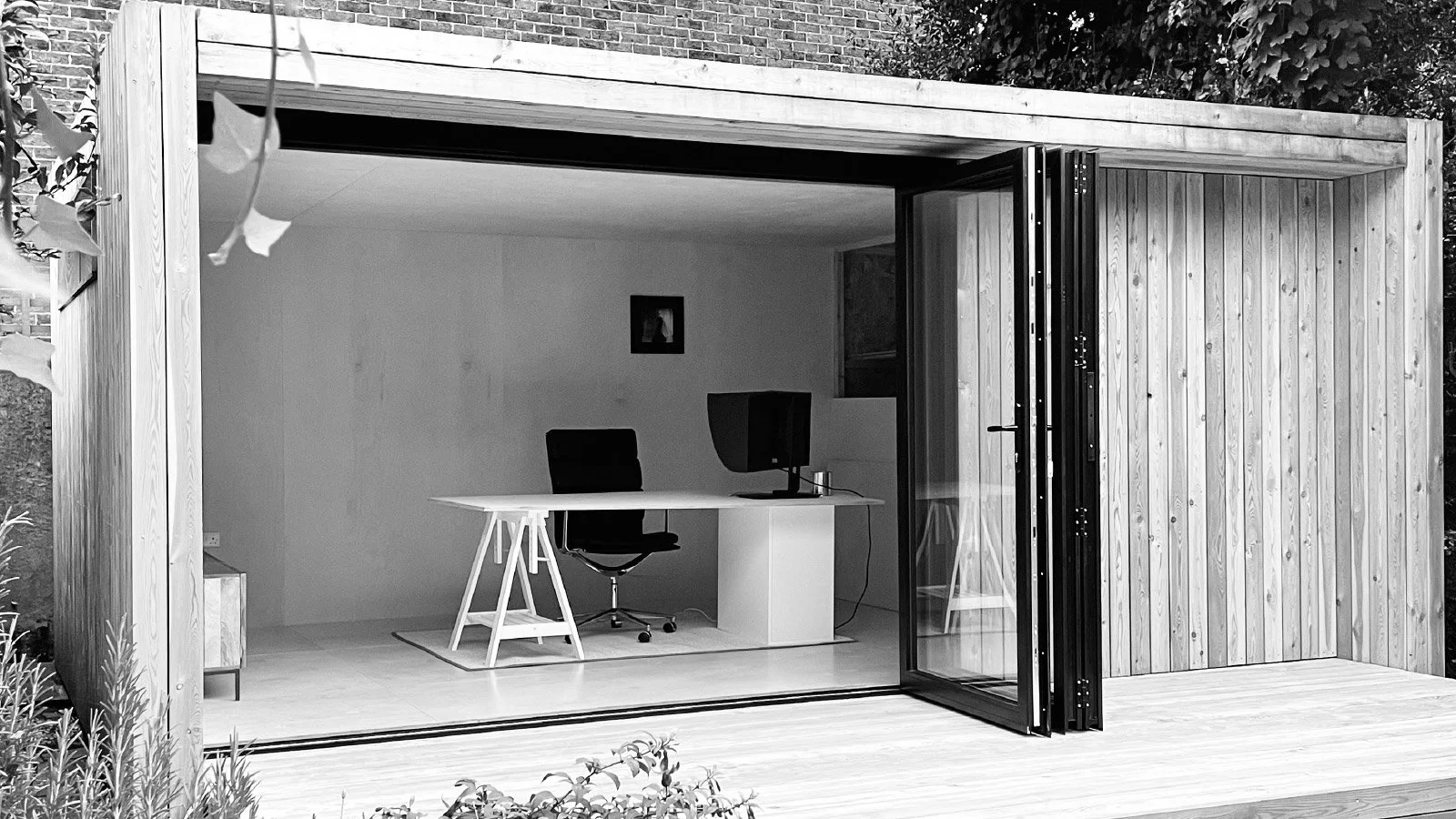
A well-designed, fully insulated garden office can:
Create a dedicated workspace away from the house
Improve focus and separation between work and home life
Add functional, usable space to your property
Make your home more attractive to future buyers
In areas like Wiltshire, Berkshire, and Surrey, buyers increasingly expect homes to have flexible, work-ready spaces.
While every property is different, a high-quality garden room can often enhance both appeal and usability, which can be just as important as pure financial return.
What Makes a Garden Office “Business-Ready”?
If you are considering using your garden room for business purposes, the specification matters.
A proper year-round garden office should include:
Full insulation (walls, floor, and roof)
Double-glazed doors and windows
A clean, plastered internal finish
Proper electrics and lighting
A layout suited to daily use
This is what separates a temporary structure from a long-term working environment.
A Practical Checklist Before You Buy
Before committing to a garden office, it’s worth running through a few key points:
Have you spoken to your accountant about purchase structure?
Do you understand how the space will be used (business vs personal)?
Have you considered VAT implications?
Do you have a clear, itemised quote?
Are you choosing a specification that supports year-round use?
Getting these right early makes everything smoother later.
Ready to Take the Next Step?
If you’re considering a garden office for your business, the best place to start is by understanding what’s available in terms of size, layout, and pricing.
From there, you can have a much more informed conversation with your accountant.
View Garden Room Models & Prices
Request an Itemised Quote for Your Accountant
Frequently Asked Questions
Can my limited company pay for a garden office?
In some cases, yes — but this depends on how the space is used and structured. It’s best to confirm with your accountant.
Can I reclaim VAT on a garden room?
If your business is VAT-registered, this may be possible, depending on usage and setup.
Is a garden office tax deductible in the UK?
Some elements may be treated differently for accounting purposes, but this varies widely. Always check with a qualified accountant.
Is it better to buy personally or through a company?
There is no single “best” option — it depends on your circumstances, usage, and long-term plans.
From Foundations to Finish: How We Build a Garden Room in Just 10–15 Days
A step-by-step guide to how long it takes to build a garden room in the UK. Discover our 10–15 day installation process, from ground screws to a fully finished, insulated space.
A high-quality, fully insulated garden room can be installed in as little as 10 working days for standard models like the NEO and FORZA. Larger or bespoke designs typically take up to 15 working days, all delivered with minimal disruption using modern SIPs construction.
One of the biggest concerns for homeowners in 2026 isn’t just the cost of a garden office — it’s the disruption.
Traditional home extensions can leave your property a building site for months, with noise, mess, and constant delays.
At Backyard Cabins, we’ve refined a process that delivers a fully insulated, plastered, and ready-to-use garden room in as little as 10 working days for standard models, and up to 15 days for larger or bespoke designs — all with minimal disruption to your home and garden.
For many of our clients choosing popular models like the NEO or FORZA, the full build is completed in just 10 working days from start to finish.
Here’s exactly how it works.
Week 1: Speed, Precision, and a Watertight Shell
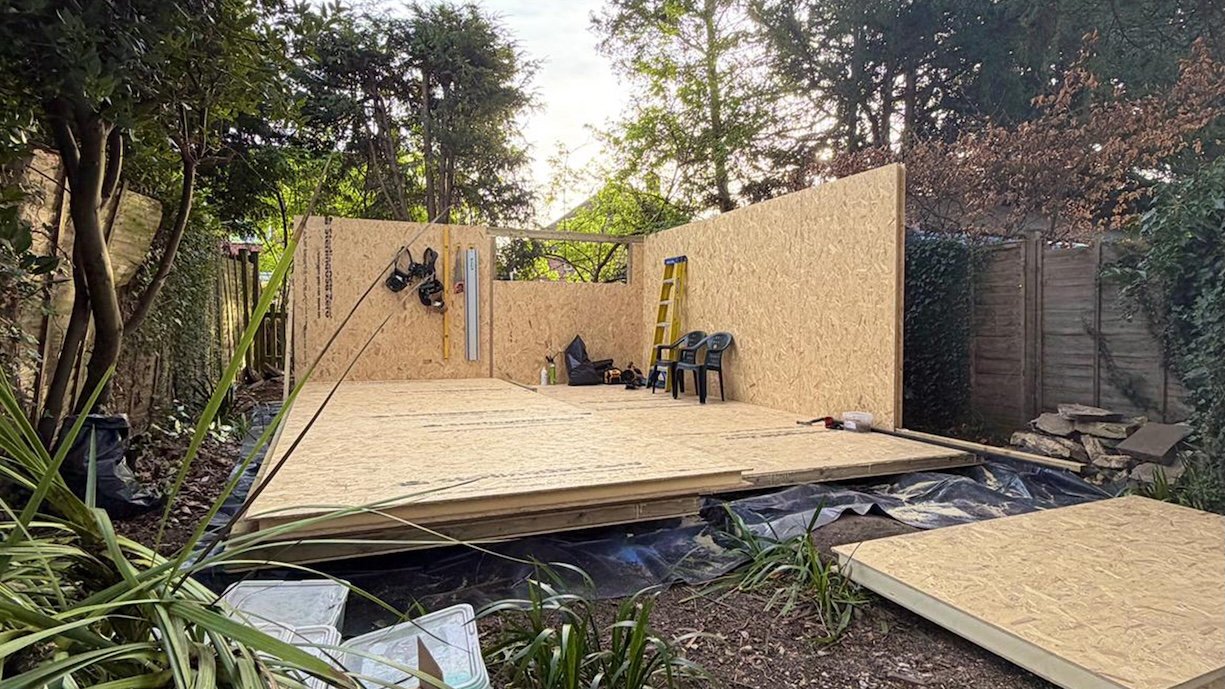
Day 1: The Modern Foundation (No Concrete Required)
Unlike traditional builders, we avoid messy concrete bases wherever possible.
Instead, we use ground screws — a modern, eco-friendly foundation system.
Why this matters:
Installed in hours, not days
No digging or heavy machinery
No waiting for concrete to cure
Minimal disruption to your garden
The result:
We can begin constructing your garden room the very same day.
Day 2–5: The SIPs Build (Fast, Strong, and Insulated)
This is where the transformation happens.
We use SIPs (Structural Insulated Panels) — a high-performance building system where structure and insulation are combined into one.
What this means for you:
Faster build time
Superior insulation performance
Airtight, energy-efficient structure
Timeline:
Day 2–3: Walls installed
Day 4: Roof structure completed
Day 5: Windows and doors fitted
End of Week 1 Milestone:
✔ Fully watertight structure
✔ EPDM rubber roof installed (long-life, low maintenance)
✔ High-performance glazing fitted
At this stage, your garden room is already protected from the elements.
Week 2: Turning a Structure into a Real Room
Once the shell is complete, the focus shifts from construction to comfort.
This is where your garden room becomes a true extension of your home — not just a garden building.
Interior Fit-Out
While the external cladding is installed, our internal team completes the full interior.
Electrics
Consumer unit installed
LED downlights
Double sockets positioned to suit your layout
Walls & Finish
Fully plastered (not timber panelled)
Smooth, modern internal finish
Painted and ready for immediate use
This is a key difference from lower-cost alternatives, which often feel like sheds rather than real rooms.
External Cladding
We install premium cladding options such as:
Thermowood
Larch-style timber
These provide:
Long-term durability
Low maintenance
A clean, modern aesthetic that improves over time
Week 3: Finishing Touches & Handover
The Final Details
The final stage is all about precision and quality.
We complete:
Skirting boards
Flooring (including optional LVT finishes)
External lighting
Final snagging and quality checks
Day 10–15: Clean Finish & Handover
Depending on the size and specification of your build:
Standard models (NEO / FORZA): ~10 working days
Larger or bespoke builds: up to 15 working days
One of our core principles is simple:
We leave your garden exactly as we found it.
That means:
Full waste removal
No leftover materials
No mess or disruption
The only final step:
Your electrician connects power via armoured cable to the pre-installed consumer unit
Garden Room vs Traditional Build: Why This Process Wins
Compared to extensions or loft conversions:
Traditional build:
8–12+ weeks
Heavy disruption
Multiple trades involved
Higher risk of delays
Backyard Cabin:
10–15 working days
Clean, controlled process
Predictable timeline
Minimal disruption
Why a 10–15 Day Build Matters in 2026
In today’s world, speed isn’t just convenient — it’s a major lifestyle advantage.
Key benefits:
No long-term disruption to your home
No building site in your garden
Faster return on investment
Immediate usable space
You go from “no space” to “fully functional room” in under three weeks.
Frequently Asked Questions
How long does it take to build a garden room in the UK?
Most garden rooms take 2–4 weeks, but with our SIPs construction system:
10 working days for standard models (NEO & FORZA)
Up to 15 working days for larger or bespoke builds
Do you need planning permission?
Most garden rooms fall under Permitted Development, meaning planning permission is usually not required.
Is a garden room usable all year round?
Yes — our cabins use SIPs construction, meaning they perform like a fully insulated room, not a seasonal structure.
Do you need a concrete base?
No — we use ground screws, which are faster, cleaner, and more efficient than traditional concrete foundations.
Ready to Transform Your Garden?
If you’re based in Wiltshire, Berkshire, Surrey, or surrounding areas, we can deliver a fully installed garden room in as little as 10 working days.