
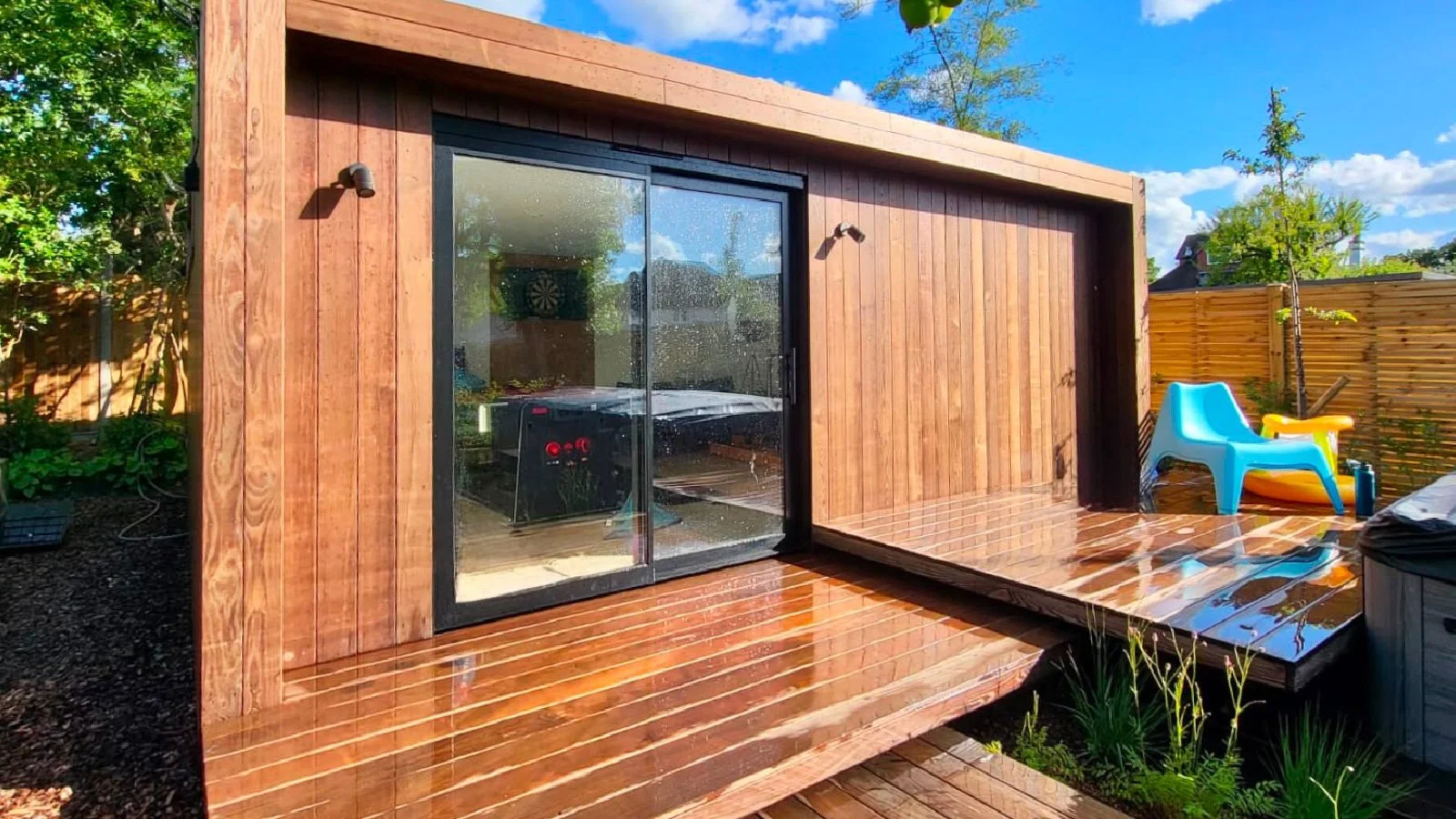
What Size Garden Room Should You Build? Why the Best Size Is Rarely Standard
Not sure what size garden room you need? Compare 3m x 3m, 4m x 3m, 5m x 4m, 6m x 4m and bespoke garden rooms, and discover why designing a cabin around your garden often delivers a better result than choosing a standard size.
Choosing the right size garden room is one of the biggest decisions you’ll make during your project.
Many homeowners begin by asking:
Should I choose a 3m x 3m garden office?
Is a 4m x 3m garden room big enough?
Would a 5m x 4m be better?
Should I build something completely bespoke?
The truth is that there isn’t one perfect answer.
The best garden room isn’t necessarily the biggest one, nor is it always one of the standard sizes shown on a website.
At Backyard Cabins, we believe the best garden room is the one that’s designed around your garden, your lifestyle and how you’ll actually use the space.
If you’re new to garden rooms, it’s also worth exploring our Garden Room Design & Build Information page to understand how our cabins are constructed and what makes them suitable for year-round use.
Quick Answer
What size garden room should I choose?
For many people, a 4m x 3m garden room provides an excellent balance of space and practicality. However, every garden is different, and many homeowners benefit from a bespoke size that makes better use of the available space.
Rather than asking which standard model to buy, it’s often better to ask:
“What size works best for my garden?”
Your Garden Isn’t Standard – Why Should Your Garden Room Be?
One of the biggest differences between Backyard Cabins and many larger manufacturers is our approach to design.
Many companies build a limited range of standard sizes in a factory.
You simply choose one that is “close enough” to what you need.
We work differently.
Our standard cabin range provides inspiration and proven layouts, but these models are only a starting point.
If your garden would work better with a cabin measuring 4.3m x 3.2m, or 5.6m x 3.8m, that’s exactly what we’ll design and build.
Every cabin is hand-built on site, allowing us to create a garden room that suits your space rather than forcing your space to suit a factory-produced building.
Small Gardens – Making Every Metre Count
If you have a smaller garden, every centimetre matters.
Many homeowners assume they need to compromise, but careful design can often create a surprisingly spacious room without overwhelming the garden.
Our NEO 3m x 3m is an excellent example of a compact garden office that’s ideal for home working, hobbies or a quiet retreat.
However, some gardens may suit a bespoke size slightly larger or slightly smaller, depending on the available space.
Sometimes adding just a few extra centimetres creates room for additional storage or a more comfortable desk layout.
The UK’s Most Popular Garden Office Size
For many households, a 4m x 3m garden room strikes the perfect balance.
It’s large enough to provide a generous workspace while still fitting comfortably into most gardens.
Discover why the FORZA 4m x 3m Garden Room has become one of our most popular layouts.
It works beautifully as:
A home office.
A treatment room.
A creative studio.
A hobby room.
A home gym.
A flexible family space.
But again, if your garden is slightly wider or slightly narrower, we can adjust the dimensions accordingly.
When a Larger Garden Room Makes Sense
If you’re looking to create a shared workspace, a larger studio or a multi-purpose family room, additional space can make a significant difference.
Our LUNA 5m x 4m provides generous proportions that work well for:
Two-person home offices.
Creative studios.
Wellness spaces.
Family rooms.
Entertaining.
Combined work and relaxation.
Many homeowners are surprised by how much more versatile a larger room becomes.
It allows different activities to take place comfortably within the same space without feeling cramped.
Take a closer look at the LUNA 5m x 4m Garden Room, designed for larger home offices, family spaces and flexible living.
Maximum Space and Complete Flexibility
For clients looking to create something truly special, our META 6m x 4m offers exceptional flexibility.
It can comfortably accommodate:
Multiple workstations.
Large home gyms.
Creative businesses.
Treatment clinics.
Games rooms.
Premium entertaining spaces.
It’s ideal for homeowners who want their garden room to become a genuine extension of their home.
See how the META 6m x 4m Garden Room provides generous space for premium home offices, studios and multi-purpose living.
When a Bespoke Garden Room Is the Better Choice
In reality, many of the cabins we build aren’t one of our standard sizes.
Every garden is different.
Some have mature trees.
Others have awkward boundaries.
Some need to maximise every available metre.
Others are designed around existing patios, landscaping or swimming pools.
Rather than asking you to compromise, we simply design the cabin around your space.
That’s one of the biggest advantages of building each project individually rather than manufacturing identical buildings in a factory.
Why We Don’t Mass Produce Garden Rooms
Backyard Cabins isn’t a production line.
We don’t have rows of identical garden rooms sitting in a warehouse waiting to be delivered.
Every project starts with a conversation.
We learn how you want to use the space.
We assess your garden.
We discuss the layout.
Only then do we begin creating your cabin.
Every structural panel is cut and assembled specifically for your project, with the building constructed on site by our experienced team.
That approach gives us the flexibility to create a garden room that feels as though it was always meant to be part of your garden.
If you’d like to learn more about how our cabins are constructed, the materials we use and why we’ve chosen SIPs construction, visit our Garden Room Design & Build Information page. It explains the build process in more detail and what makes our cabins suitable for comfortable year-round use.
Think About How You’ll Use the Space in Five Years
One of the biggest mistakes homeowners make is designing only for today’s needs.
A home office today might become:
A teenager’s study room.
A creative studio.
A treatment room.
A home gym.
A hobby room.
A guest retreat.
Thinking ahead often leads to better design decisions and a garden room that continues to work for many years.
Frequently Asked Questions
What is the most popular garden room size?
A 4m x 3m garden room is one of the most popular choices because it offers an excellent balance between internal space and garden impact.
Is a bespoke garden room more expensive?
Not necessarily. The cost depends on the overall design, specification and materials rather than simply whether the dimensions are standard or bespoke.
Can you build a garden room to fit an awkward space?
Yes. Many of our projects are designed specifically around unusual garden layouts, existing landscaping or awkward boundaries.
Should I choose a standard model or a bespoke design?
Our standard cabins are an excellent starting point, but many clients ultimately choose a bespoke size to make the best possible use of their garden.
Final Thoughts
Choosing the right garden room isn’t about finding the closest standard size.
It’s about creating a space that fits your garden, complements your home and supports the way you want to live.
Whether that’s a compact home office, a spacious family room or something completely bespoke, the right design should work around you—not the other way around.
At Backyard Cabins, that’s exactly how we approach every project.
Ready to Find the Right Garden Room?
Whether one of our standard designs is the perfect fit or you need a completely bespoke cabin, we’re always happy to discuss your ideas and help you create a garden room that’s designed around your garden, your lifestyle and the way you’ll use the space.
Explore Our Cabin Range to compare our standard models, browse our Gallery to see completed projects, or arrange a site visit and we’ll help you decide on the right size, layout and specification for your project.
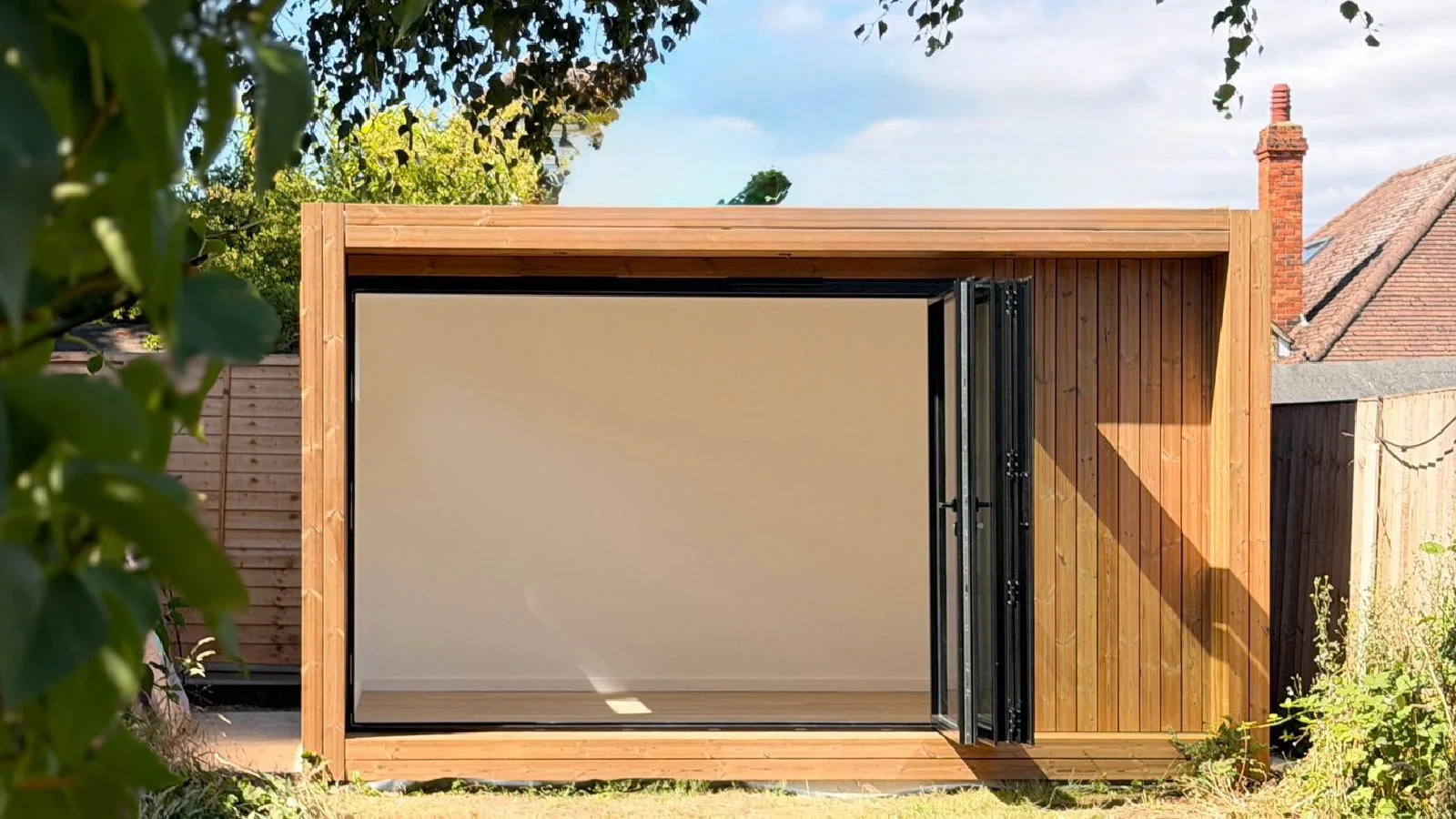
Can You Build a Garden Room with No Side Access? Here’s How We Recently Did It in Surrey
Think your garden is impossible to access? Discover how our latest Surrey garden room project demonstrates that limited access doesn’t always mean limited possibilities.
One of the first things many homeowners say when they contact us isn’t about the size of the cabin or how much it costs.
Instead, it’s usually something like:
“I don’t think you’ll be able to get it into the garden.”
Perhaps there’s no side gate.
Maybe your property is terraced.
Perhaps the access is narrow, or neighbouring fences leave very little room to manoeuvre.
Many people assume that because a garden room is a substantial structure, it must arrive in one huge piece.
Fortunately, that’s rarely the case.
A recently completed project in Surrey perfectly demonstrates why limited access is often far less of an obstacle than homeowners imagine.
Quick Answer
Can a garden room be built if there’s no side access?
In many cases, yes.
Unlike some pre-manufactured buildings that rely on large factory-built sections being craned into position, our garden rooms are constructed on site using Structural Insulated Panels (SIPs).
This means materials can often be carried through side passages, through the house or, where appropriate, by temporarily removing fence panels.
Every property is different, but restricted access is rarely the deal-breaker many people assume it will be.
Why Access Worries So Many Homeowners
It’s completely understandable.
When people picture a garden room being installed, they often imagine:
Huge wall sections arriving on articulated lorries.
Large cranes lifting buildings over houses.
Extensive disruption to neighbouring properties.
Major landscaping work before construction can even begin.
In reality, many bespoke garden rooms are built very differently.
The construction method plays a huge role in determining how easily materials can be transported to the garden.
How We Build Our Garden Rooms
At Backyard Cabins, our buildings are constructed on site using high-performance 97mm Structural Insulated Panels (SIPs), featuring a continuous 75mm polyurethane insulation core.
Rather than transporting one enormous building to your property, individual structural components are carefully brought to site before being assembled into the finished cabin.
This approach offers several advantages.
It makes transportation significantly more manageable.
It allows us to work in gardens with restricted access.
It also enables us to maintain an exceptionally high standard of finish throughout the build.
Every project is carefully planned around the individual property rather than expecting every garden to suit a standard construction process.
A Real Project in Surrey
Our latest FORZA garden room project in Surrey is a perfect example.
The client wanted a dedicated home office that could also become a quiet study space for their daughter as she prepares for her GCSE examinations.
The garden already contained an existing concrete base, making it an ideal starting point for the project.
Access was available via the neighbouring property, allowing materials to be transported efficiently.
However, even without that access, alternative solutions were available.
Depending on the property, materials can often be taken through the house or by temporarily removing fence panels where appropriate.
It’s exactly why we always recommend discussing your property before assuming a garden room isn’t possible.
Every Garden Is Different
No two gardens are the same.
Some have:
Narrow side passages.
Terraced layouts.
Existing patios.
Mature landscaping.
Sloping ground.
Limited working space.
These aren’t unusual situations.
In fact, they’re something we encounter regularly.
Rather than looking for reasons why a project can’t be completed, we focus on finding the most practical way to make it work.
Sometimes that means adjusting the installation sequence.
Sometimes it means changing how materials are transported.
Sometimes it simply means careful planning before work begins.
Building During a Summer Heatwave
This particular project was completed during one of the hottest spells of the year, with temperatures reaching around 35°C.
Working in those conditions requires flexibility.
Rather than exposing materials unnecessarily to direct sunlight throughout the day, sections of the external cladding were prepared under cover before being installed onto the cabin.
This approach offered several advantages.
It improved efficiency.
It allowed greater accuracy during assembly.
It reduced unnecessary exposure to the hottest conditions.
Most importantly, it helped us maintain the quality standards we expect on every build.
Why Preparation Makes Such a Difference
People often think building a garden room is simply a case of arriving on site and fixing everything together.
The reality is very different.
Good preparation speeds up installation while also improving quality.
By carefully preparing components before installation, we can spend more time focusing on precision, alignment and finishing details once they reach the building itself.
Many of the small details homeowners notice in the finished cabin are the result of careful planning long before the final boards are fixed into place.
Designed for More Than Just Work
Although this cabin has been built primarily as a home office, it has also been designed with flexibility in mind.
During the working week it provides a quiet, professional workspace away from the distractions of the main house.
Outside working hours it becomes a comfortable study room, giving the family’s daughter a peaceful environment for GCSE revision.
As life changes, the space can continue to evolve.
A home office today might become a hobby room, creative studio, treatment room, home gym or simply somewhere to relax tomorrow.
That’s one of the biggest advantages of investing in a properly insulated garden room.
What’s Left Once We Finish?
Another common misconception is that homeowners need to coordinate numerous trades after the cabin has been built.
In reality, almost everything is completed before handover.
The cabin includes:
First-fix electrics.
Internal consumer unit.
Integrated lighting.
Double sockets.
Finished plastered and painted interior.
Luxury LVT flooring.
The only remaining step is for the client’s qualified electrician to connect the cabin to the property’s electrical supply.
Once that’s complete, the garden room is ready to enjoy.
Don’t Rule Your Garden Out Too Quickly
Over the years we’ve visited many properties where the homeowner’s first words were:
“I don’t think it’ll fit.”
More often than not, it does.
Limited access doesn’t automatically prevent you from building a beautiful, fully insulated garden office.
Every property presents its own challenges, but with careful planning, flexible construction methods and the right design approach, many gardens are far more suitable than people initially believe.
The best way to find out is simply to ask.
You might be surprised by what’s possible.
Can a Garden Office Stay Cool During a UK Heatwave? What Homeowners Need to Know
Worried your garden office will overheat? Learn how modern insulation, SIPs construction and optional air conditioning can help keep your workspace comfortable during even the hottest UK summers.
With temperatures reaching well above 30°C across parts of the UK, many homeowners are asking the same question:
“Will a garden office become unbearably hot in summer?”
It’s a sensible concern. If you’re planning to spend hours working from home, the last thing you want is a space that feels more like a greenhouse than a professional office.
The good news is that a well-designed, properly insulated garden room can remain comfortable even during periods of unusually hot weather.
In fact, many of the same features that keep a building warm in winter also help keep it cooler in summer.
Whether you’re working from a garden in Wokingham, Walton-on-Thames, Salisbury or anywhere else across the South East, thoughtful design can make all the difference.
Quick Answer
Do garden offices get too hot during a heatwave?
Not necessarily.
A high-quality garden room built with modern insulation, quality glazing and good ventilation will generally perform far better than a basic timber shed or summerhouse. Optional air conditioning can provide additional comfort during prolonged periods of extreme heat.
The key is choosing a building that’s designed for year-round use rather than occasional seasonal use.
Insulation Doesn’t Just Keep Heat In, It Helps Keep Heat Out
Many people assume insulation only matters in winter.
In reality, insulation slows the transfer of heat in both directions. During colder months it helps retain warmth inside the building, while during summer it reduces the amount of external heat entering the structure.
This is one reason why a well-insulated home often feels cooler than a poorly insulated one during a heatwave.
At Backyard Cabins, our buildings utilise high-performance 97mm Structural Insulated Panels (SIPs) incorporating a continuous 75mm polyurethane insulation core, creating an efficient thermal envelope designed for comfortable year-round use.
A Garden Office Is Very Different from a Garden Shed
It’s easy to assume all timber buildings behave the same way in hot weather.
They don’t.
A typical garden shed is designed for storing tools and equipment. It often has little or no insulation and minimal consideration for year-round occupancy.
A professionally designed garden office is built with comfort in mind.
Features such as insulated wall systems, quality glazing, interior finishes and heating options all contribute to creating a space that’s suitable for everyday work rather than occasional storage.
Natural Light Is Important, So Is Thoughtful Design
Large glazed doors and windows can transform the feel of a garden office, filling it with daylight and creating a strong connection to the garden.
Equally important is how those openings are incorporated into the overall design.
Window placement, ventilation and sensible use of shading can all contribute to maintaining a pleasant internal environment during warmer weather.
Every project is different, which is why bespoke planning often delivers the best long-term results.
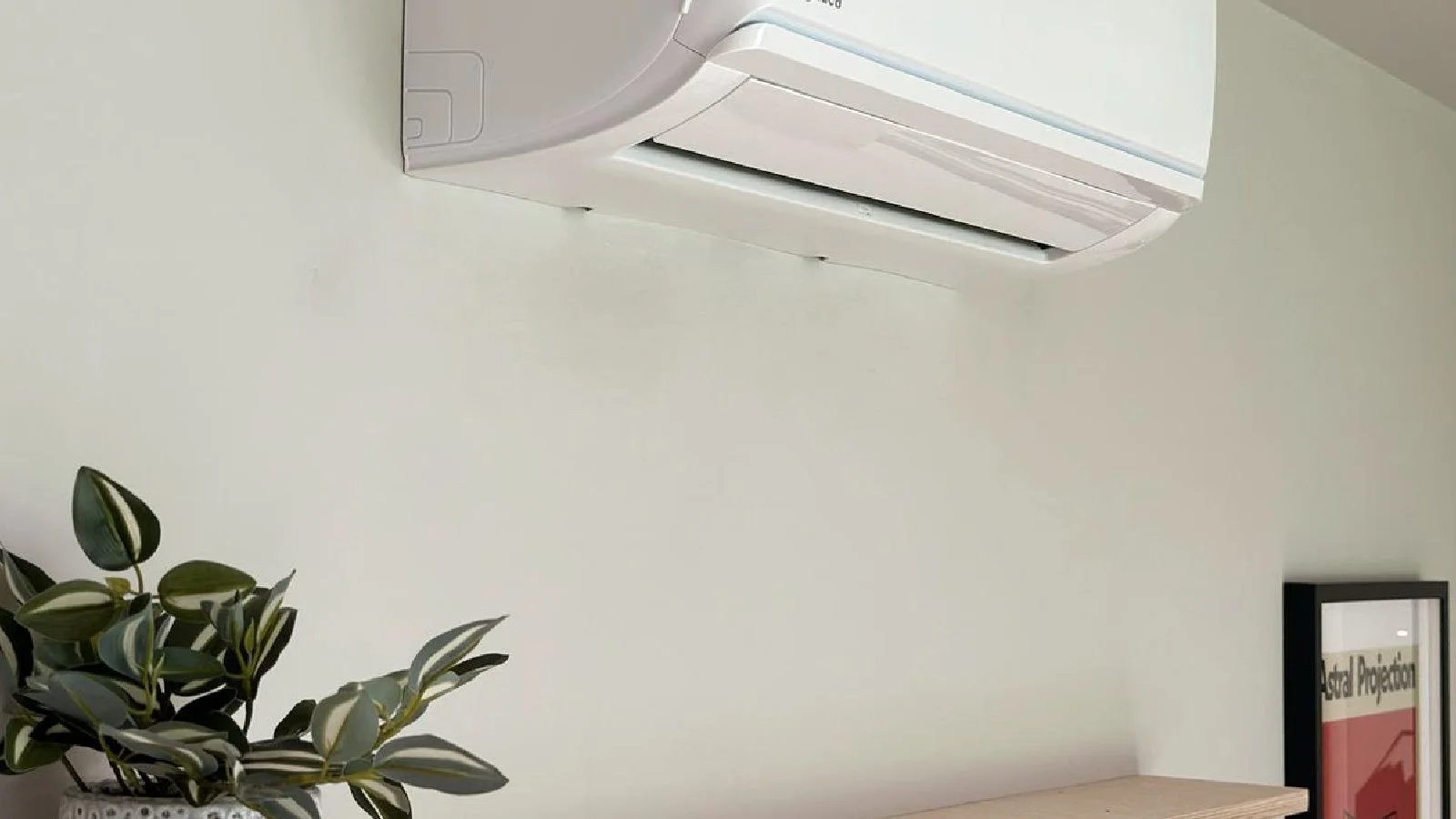
Air Conditioning Can Make Summer Working Even More Comfortable
For clients who spend long days working from their garden office, air conditioning can be an excellent optional upgrade.
Modern systems don’t just cool the room in summer – many also provide highly efficient heating during colder months.
Because every Backyard Cabin includes first-fix electrics and an internal consumer unit, incorporating air conditioning into the overall electrical installation is straightforward for a qualified electrician.
Combined with a well-insulated structure, this creates a workspace that remains comfortable whatever the season.
It’s the Whole Design That Makes the Difference
Keeping a garden office comfortable isn’t about relying on a single feature.
It’s the combination of quality construction and intelligent design that delivers the best results.
Important considerations include:
High-performance SIPs construction.
Quality double glazing.
Effective insulation.
Durable roofing systems.
Sensible window positioning.
Good ventilation.
Optional climate control where desired.
Together, these elements help create a space that feels like a genuine extension of your home rather than an outdoor outbuilding.
Comfort Has a Direct Impact on Productivity
Anyone who works from home knows how much the environment affects concentration.
A room that’s too hot can quickly become uncomfortable and distracting.
A properly designed garden office provides a dedicated space where you can focus on your work, enjoy natural light and maintain a comfortable environment throughout the changing seasons.
For many homeowners, that translates into improved productivity and a far more enjoyable working day.
Frequently Asked Questions
Do SIPs garden rooms stay cooler in summer?
High-performance SIPs construction helps reduce heat transfer through the walls, floor and roof, contributing to a more stable internal temperature than poorly insulated structures.
Does insulation help during hot weather?
Yes. Insulation slows heat transfer, helping reduce the amount of external heat entering the building as well as retaining warmth during winter.
Is air conditioning worth adding to a garden office?
For homeowners who expect to use their garden office throughout the hottest months of the year, air conditioning can be an excellent investment and also provides efficient heating in winter.
Will my garden office feel like a greenhouse?
A purpose-built garden office with quality insulation and thoughtful design performs very differently from a basic summerhouse or storage shed and is intended for comfortable year-round use.
H2: Final Thoughts
The recent UK heatwave has highlighted just how important good design can be.
A premium garden office should provide a comfortable place to work not only during spring and autumn but throughout the hottest days of summer and the coldest weeks of winter.
By combining high-performance SIPs construction, quality materials and carefully considered design, a modern garden room can become a practical, productive and enjoyable space all year round.
If you’re considering investing in a garden office, don’t just think about how it will look – think about how it will perform when temperatures reach their extremes.
A building designed for genuine year-round use will reward you every single day you use it.
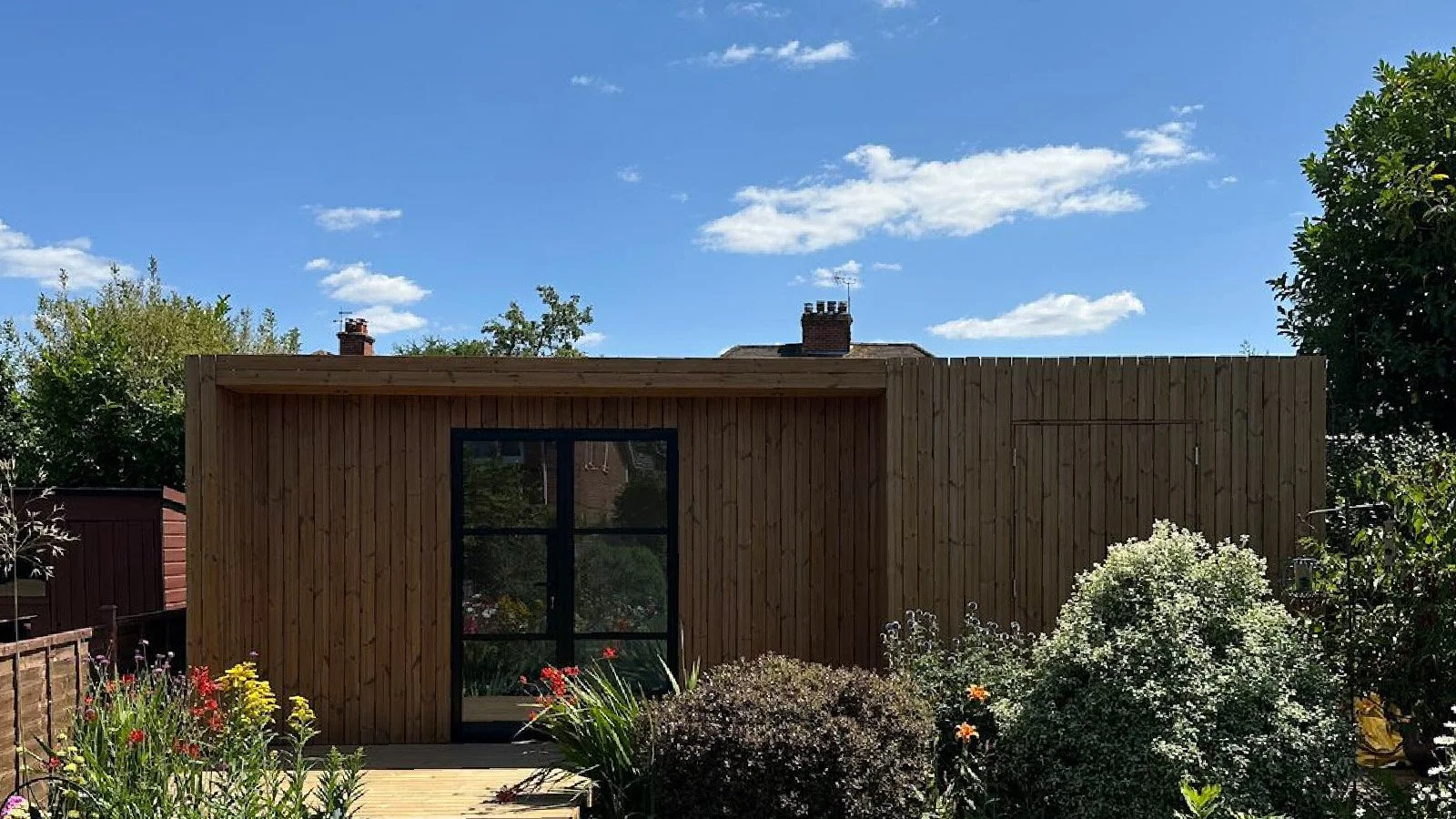
Garden Office and Shed Combined: Design Ideas, Sizes and Custom Options
Need a garden office without losing valuable storage? Explore integrated office and shed designs, separate layouts and bespoke options created around your garden.
Creating a garden office should not mean losing the practical storage your garden still needs.
Bikes, tools, lawnmowers, outdoor furniture and gardening equipment all need somewhere secure and accessible. At the same time, working beside that equipment in a traditional shed is unlikely to provide the quiet, comfortable environment you want from a professional home office.
Fortunately, you do not always have to choose between the two.
A garden office and shed can be combined within one carefully designed building, with a partition separating the insulated office from a dedicated storage area. Alternatively, the office and shed can remain separate while being planned together as part of one attractive garden layout.
The right approach depends on your available space, storage requirements, budget and how you want the garden to feel.
At Backyard Cabins, most of the garden rooms we build involve some level of customisation. We can adjust dimensions, change door and window positions, create internal partitions and design a layout around the way you actually use your garden.
Speak to us about a custom garden office and storage design
Can you combine a garden office and shed?
Yes. A fully insulated garden office and secure storage shed can be created within the same building.
The interior is divided into separate areas, normally with independent external access. The office side is finished as a comfortable room, while the storage side is designed for bikes, tools, garden equipment or other practical items.
Another option is to create two separate structures or retain an existing shed alongside the new garden office. This can work particularly well where the garden has enough space or where keeping noisy, damp or bulky equipment completely separate from the workspace is important.
Neither approach is automatically better. The best design is the one that makes sensible use of your garden and suits your priorities.
What is a combined garden office and shed?
A combined garden office and shed is one building with two distinct functions.
One section is designed as a complete garden office. It is insulated, heated, plastered, painted and fitted with flooring and electrics.
The other section provides practical storage. It may be used for:
Bicycles
Lawnmowers
Garden tools
Outdoor furniture
Barbecues
Sports equipment
Children’s outdoor toys
Decorating supplies
General household storage
A solid internal partition separates the two spaces. Each area can have its own external door, allowing you to enter the office without walking through the storage section.
From outside, the building can appear as one carefully designed garden room. The storage entrance can be positioned discreetly at the side, helping the main office elevation remain clean and attractive.
What are the advantages of an integrated design?
Combining an office and storage area within one structure can be an excellent way to use a smaller garden efficiently.
The main benefits include:
One coordinated building rather than two unrelated structures
A smaller overall footprint
A consistent exterior design
Secure storage immediately beside the office
Greater flexibility over the internal layout
Fewer separate structures competing for space
A cleaner and more organised garden
The ability to conceal the storage entrance from the main view
An integrated layout can also make an awkward corner or unusually shaped part of the garden much more useful.
For example, a narrow section at one end of the building might not add much value to the office, but it could provide excellent bike or tool storage. Custom design allows that space to serve a practical purpose.
When might separate buildings work better?
An integrated office and shed is not the only solution.
In some gardens, keeping the office and storage building separate creates a better result. This may be appropriate when:
You already have a shed that remains in good condition
Your garden has enough space for two buildings
The storage area contains damp, dirty or noisy equipment
You want maximum sound separation
You may remove or replace the shed in the future
An existing concrete base or hardstanding can be reused
The shape of the garden naturally creates two different zones
A separate office remains completely free from gardening equipment, fuel, paint, tools and other stored items. It may also be easier to heat efficiently because every part of the insulated building is used as a finished room.
The decision should be based on the garden as a whole, not simply on what appears easiest from a standard plan.
Integrated or separate: which layout should you choose?
Choose an integrated office and shed when saving space and achieving one coordinated design are the main priorities.
Choose separate buildings when you already have useful storage, have enough available space, or want the cleanest possible separation between work and garden equipment.
It can help to consider the following questions:
How much storage do you genuinely need?
What will you store?
How often will you need to access it?
Do you need to wheel bicycles or machinery through the doorway?
Should the storage entrance be visible from the house?
How many people will use the office?
Could your requirements change in the next few years?
Would storage space be more useful than a larger office?
Are there any awkward boundaries, trees or access restrictions?
Once these questions are answered, it becomes much easier to decide whether one combined building or two separate structures will work best.
How much space should you allow for storage?
The answer depends on what you intend to keep inside.
A compact storage section may be enough for hand tools, folding furniture and garden supplies. Bicycles, lawnmowers and larger equipment need more floor space, a wider doorway and a clear route through the garden.
It is worth measuring the larger items before settling on a design. Storage can quickly become frustrating if a door is too narrow or equipment has to be moved every time you need something from the back.
You should also consider vertical storage. Wall hooks, shelving and tall storage racks can make a relatively compact area far more useful without taking excessive space away from the office.
The office itself must remain large enough for its intended purpose. A single-person workspace may only require a desk, chair and modest storage. An office for two people, client meetings or creative work will need more room.
A custom layout helps balance these requirements instead of dividing the building according to arbitrary standard measurements.
Garden office and shed layout ideas
There are several ways to arrange a combined building.
Office with storage at the side
This is one of the most practical layouts.
The main garden-facing elevation is used for the office, with glazed doors or windows providing natural light. A separate storage door is positioned on the side of the building.
This keeps the storage entrance discreet and allows the office to remain the visual focus.
It works particularly well in gardens with side access or enough clearance beside the cabin.
Office with storage at the rear
A storage section can sometimes be placed behind the office, particularly on a deeper plot.
This creates a clean front elevation, although the design must provide a practical route to the rear entrance. It is important to ensure the storage space does not become awkward to access.
Office and storage divided across the front
Where side access is limited, both doors can be positioned on the front elevation.
Careful design can still make the office feel attractive and welcoming. Different door styles, cladding details and positioning can help the storage entrance appear more discreet.
L-shaped office and storage layout
An L-shaped design can work well in a corner garden or around an existing feature.
One section may contain the main office, while the shorter return provides storage. This can create a sheltered outdoor area while making good use of an awkward boundary.
Office with a narrow bike store
A slim storage section can be included specifically for bicycles.
This is helpful for households that need secure bike storage but do not require a full-sized shed. A wide external door, strong lock and suitable internal fixings should be considered from the beginning.
Two-room garden office
Not every additional room has to be used as a traditional shed.
A partitioned garden room might include:
A main office and stock room
An office and archive
A studio and equipment store
A treatment room and supply cupboard
A gym and changing area
A creative workspace and materials store
An office and small workshop
This is where custom design becomes particularly valuable. The layout can be planned around the intended use rather than a generic definition of an office or shed.
A real garden office and storage project in Surrey
A recent bespoke FORZA project in Surrey demonstrates how important it is to consider the entire garden before choosing a layout.
The property already had an existing concrete base and the owners needed both a comfortable workspace and practical storage.
Rather than automatically covering the whole area with one large structure, the garden was planned as two complementary zones. The bespoke garden office occupies one side of the available space, while the remaining area is retained for a separate storage building.
This approach gives the client:
A quiet and fully finished office
Space for practical garden storage
Clear separation between work and equipment
Flexibility to change the storage building in the future
Better use of the existing footprint
A garden that remains organised without feeling overcrowded
For another customer, an integrated storage room might be the better solution. The value of bespoke design is that the building and layout can respond to the actual garden.
Learn more about our garden rooms in Surrey
Why custom design matters
Most of the cabins we build are customised in some way.
Standard models are useful starting points because they help customers understand likely sizes, proportions and prices. However, real gardens rarely follow standard measurements.
A custom garden office and shed can be designed around:
The exact width and depth of the available space
Boundaries and neighbouring properties
Existing patios or concrete bases
Trees and established planting
The direction of natural light
Side access
The position of the house
The view from inside the office
The amount and type of storage required
Future changes in how the room may be used
Customisation might involve changing a window position, adding a partition, moving a door or adjusting the external dimensions.
In other cases, a completely bespoke design may provide a much better solution than modifying a standard model.
The aim is not to make the building complicated. It is to make every part of it useful.
View our cabin models and starting prices
What is included in the office section?
The office part of a combined building should feel like a proper room, not a section of a garden shed.
A complete Backyard Cabin includes:
A fully insulated SIPs structure
Insulation in the walls, floor and roof
Premium exterior cladding
Durable EPDM roofing
Aluminium double-glazed doors
Flooring
Skirting boards
A plastered interior
Walls painted white
Internal and external lighting
Electrical sockets and a dedicated consumer unit
A radiator for colder weather
Professional installation
Removal of building waste
A 10-year structural warranty
This creates a comfortable space that is ready to furnish and use.
The precise specification of the storage section will depend on its purpose. It may not require the same internal finish as the office, but security, ventilation and durability should all be considered.
See what is included with a Backyard Cabin
Should the shed section be insulated?
A storage area does not always need the same insulation and internal finish as the office.
If it will only hold garden tools, bicycles or outdoor furniture, a simpler finish may be appropriate. However, the construction still needs to protect stored belongings from the weather and provide suitable ventilation.
If the second section will store sensitive equipment, paperwork, stock, musical instruments or materials affected by temperature and humidity, insulation may be more important.
The intended use should be agreed before the building is designed. It is much easier to include insulation, electrics and suitable ventilation at the planning stage than to add them later.
How do you keep the office quiet and comfortable?
A proper partition is essential.
The storage area should not simply be separated by lightweight shelving or furniture. A well-designed internal wall provides better sound separation, security and temperature control.
The layout should also keep noisy or frequently used equipment away from the main desk position where possible.
Other useful considerations include:
Separate external entrances
Suitable seals around doors
Insulation around the office
Thoughtful socket and desk placement
Storage fixings that prevent tools or bicycles falling
Adequate ventilation in the storage section
A radiator correctly positioned within the office
Windows arranged to provide useful natural light without screen glare
These details may appear small, but they make a significant difference to everyday use.
How secure is a combined office and shed?
Security should be considered for both sections.
The storage area may contain valuable bicycles, tools and equipment, while the office could contain computers and other electronics.
A custom design allows doors and windows to be positioned away from exposed boundaries where appropriate. External lighting can also help make entrances more visible.
Good security starts with a robust structure, suitable doors and appropriate locks. Depending on what you intend to store, you may also wish to consider an alarm, camera or secure internal anchor points.
Avoid treating the storage section as an afterthought. It should be included in the security plan from the beginning.
Can an existing concrete base be reused?
Possibly, but it must be assessed first.
An existing concrete slab may look suitable while being the wrong size, uneven, damaged or inadequate for the proposed structure. Drainage and the relationship between the base and surrounding ground also need consideration.
Reusing an appropriate base can reduce unnecessary disruption, but it should not be assumed that every existing slab is suitable.
We review the site and proposed building before confirming the foundation approach.
Does a combined garden office and shed need planning permission?
Many garden offices and storage buildings can be constructed under permitted development rights, provided they meet the relevant rules.
Combining two uses within one structure does not automatically mean planning permission is required. The building’s height, position, total area and intended use are among the factors that need to be considered.
Additional restrictions may apply if:
The building will be positioned near a boundary
The property is listed
The garden is within a conservation area
An Article 4 Direction applies
Permitted development rights have been removed
The proposed building covers a substantial part of the garden
The use goes beyond normal domestic purposes
Planning rules vary according to the property and circumstances. This article is general information and should not be treated as planning advice.
For a fuller explanation, read our garden room planning permission guide and confirm your circumstances with the relevant local authority or planning professional.
How much does a combined garden office and shed cost?
The cost depends on the overall size, the amount of finished office space, the storage specification, the site and the level of customisation.
Our standard cabin models provide useful starting points for understanding garden room prices. A combined office and storage building normally requires a personalised quotation because the internal proportions and features are designed around the customer.
The quotation may be affected by:
Overall dimensions
Size of the storage section
Number and type of external doors
Internal partitions
Windows and glazing
Insulation requirements
Electrical requirements
Heating
Ground conditions
Site access
Custom finishes
We will discuss these points before confirming a design and price.
View our garden room models and prices
Is a combined office and shed right for a small garden?
It can be.
A combined structure may use less space than two separate buildings because it shares one overall footprint and roofline.
The key is to be realistic about how much office and storage space you need. Trying to fit a large office and full storage shed into a very small structure can leave both areas feeling compromised.
Vertical storage, wall-mounted bike racks and carefully planned shelving can make the storage section more efficient.
For some small gardens, retaining a compact separate shed and choosing a smaller office may still be the better option. A site-specific design will help establish which arrangement makes the best use of the available space.
Frequently asked questions
Can a garden office have an integrated shed?
Yes. A garden office can include a separate storage section within the same structure. A solid partition and independent external doors help keep the office comfortable and the storage area practical.
Is an office and shed combination suitable for use throughout the year?
The office section can be designed for comfortable use throughout the year with proper insulation, double glazing, heating and a complete internal finish.
Will tools and bicycles make the office cold?
They should not if the office and storage areas are designed as separate spaces with an appropriate partition, insulation and independent doors. The design should prevent the storage entrance from opening directly into the office.
Can both sections have electricity?
Yes. Electrical requirements can be included during the design process. The final arrangement will depend on how each area will be used and the agreed specification.
Can you add storage to a standard garden room model?
Often, yes. A standard model can provide a starting point, but the overall dimensions and layout may need adjusting to create useful storage without compromising the office.
Can the storage door be hidden from view?
The storage entrance can often be positioned on the side or rear elevation, subject to access and the garden layout. This helps the main office elevation remain clean and attractive.
Can you build an office and shed on an existing base?
Sometimes. The base must be assessed for its dimensions, condition, level and suitability before it can be reused.
Is one combined building cheaper than two separate buildings?
Not always. The cost depends on the size, specification, groundwork and level of customisation. A combined building may use the available space more efficiently, but it still requires careful construction and a properly finished office.
Can the second room be used for something other than storage?
Yes. It could become a stock room, changing area, small workshop, archive, equipment room or another space suited to your requirements.
Can Backyard Cabins create a completely bespoke layout?
Yes. Most of our projects include custom elements, and we can create a layout around your garden, storage needs and intended use.
Start planning your garden office and storage space
A garden office and shed can work beautifully together when both functions are considered from the beginning.
For some homes, the best solution is one building with an integrated storage section. For others, a separate shed and garden office will create better access, sound separation and long-term flexibility.
The right answer comes from understanding your garden and how you plan to use it.
Backyard Cabins designs and installs complete, fully insulated garden rooms throughout Berkshire, Surrey, Oxfordshire, London, Wiltshire and surrounding areas. Our standard models provide helpful starting points, but most of our cabins are customised to suit the customer.
If you need a quiet place to work without losing valuable storage, we can help you compare the options and create a design that makes sense for your home.
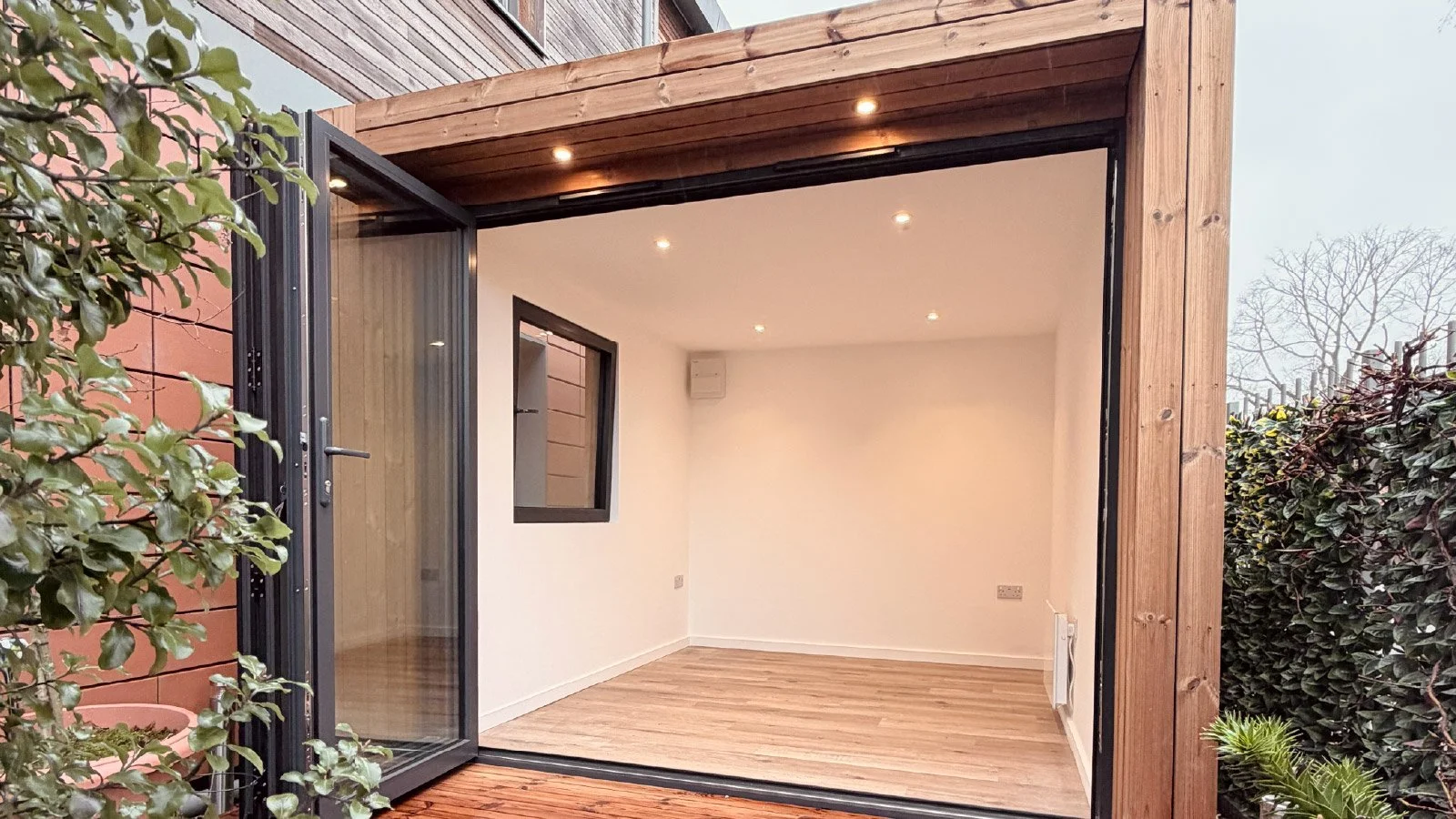
Garden Rooms Surrey – How to Choose the Right Garden Office or Outdoor Space
A practical guide to garden rooms in Surrey. Discover how to choose the right garden office, understand year-round performance, and decide between pre-designed and bespoke options.
Across Surrey, more homeowners are choosing garden rooms as a practical alternative to extensions. Whether the goal is a dedicated garden office, a creative studio, or a flexible multi-purpose space, a well-designed garden room can transform how your home functions, without the disruption of major building work.
If you’re considering a garden room in Surrey, here’s what you should think about before making a decision.
Why Garden Rooms Are Growing in Popularity in Surrey
Surrey homes often benefit from generous gardens, making them ideal for adding usable space without altering the main house.
A garden room offers something unique:
Physical separation from the home
A calm, distraction-free environment
A flexible space that can evolve over time
An alternative to extending or converting interior rooms
For many homeowners, a garden office in Surrey provides the ideal balance between working from home and maintaining boundaries between work and personal life.
Can You Use a Garden Room All Year Round?
One of the most common questions is whether garden rooms are suitable for winter use.
The answer depends entirely on how they’re built.
A high-quality garden room should include:
Full insulation in walls, floor and roof
A strong structural system
Proper waterproofing and breathable membrane protection
Quality glazing to maximise natural light while maintaining comfort
When built correctly, a garden room becomes a true year-round space — not a seasonal summer feature.
Garden Office or Multi-Use Space?
Before choosing a design, it’s important to consider how you’ll use the space day to day.
A garden office typically requires:
Adequate desk and storage space
Strong natural light
A quiet, private setting
But many Surrey homeowners choose to future-proof their investment. What begins as a home office may later become:
A yoga or wellness studio
A garden gym
A consulting or therapy room
A guest or hobby space
Flexibility is key.
Pre-Designed vs Bespoke Garden Rooms in Surrey
When exploring options, you’ll generally have two routes.
Our pre-designed garden rooms offer proven layouts and carefully balanced proportions. They’re ideal if your garden has a straightforward footprint and you want a well-considered, efficient design that works beautifully in everyday use.
You can explore our full range of pre-designed garden cabins to see which size and layout may suit your space.
Bespoke garden rooms, on the other hand, are better suited for:
Narrow or corner plots
Specific layout requirements
Integrated storage solutions
Partitioned or multi-use spaces
The right choice depends on your garden, your lifestyle, and how you want the space to feel long term.
Do Garden Rooms Need Planning Permission in Surrey?
In many cases, garden rooms fall under permitted development. However, this depends on factors such as height, placement and intended use.
For example, there are commonly referenced rules around maximum height when positioned close to a boundary, and different overall limits depending on roof style.
It’s always sensible to understand the basics before committing, particularly if your property has specific planning restrictions.
Choosing the Right Garden Room Builder in Surrey
Not all garden rooms are built to the same standard.
When comparing providers, look beyond appearance and consider:
Construction method and insulation quality
Waterproofing systems
Warranty and longevity
Reviews and completed projects
Whether designs are created in-house
A garden room should be a long-term investment, not a temporary solution.
Explore Garden Rooms in Surrey
If you’re considering a garden room or garden office in Surrey, it’s worth taking the time to explore different layouts, finishes and options before deciding.
You can explore our full guide to garden rooms in Surrey here:
Explore our Garden Rooms in Surrey
Or browse our range of pre-designed cabins and bespoke options to see what might suit your garden best.
Thinking About a Garden Room?
A well-designed garden room can change how you live and work — providing space, separation and flexibility without altering your main home.
If you’re based in Surrey and exploring options, start by understanding how the structure is built, how it performs year-round, and which layout best suits your space.
The right design makes all the difference.